
Vibe-Building a Robot: I Did the Soldering, Claude Did the Rest
A desk robot that celebrates Bayern goals: resin-printed body, Rust firmware, a website on Cloudflare Workers. Claude Code did the CAD, the firmware and the backend. I did the soldering, the painting and the complaining.
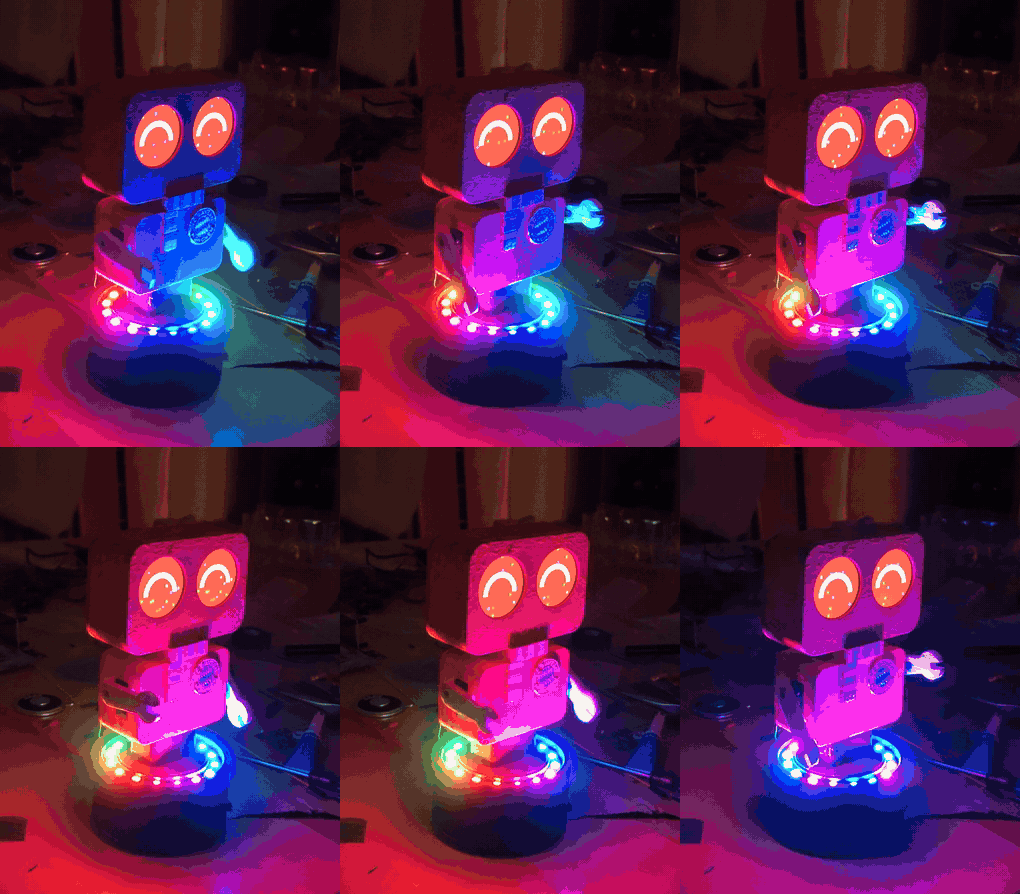
My dad is a big FC Bayern fan, and his birthday was coming up. I wanted to build him something instead of buying something: a little robot for his desk that throws its arms in the air and blasts the goal anthem whenever Bayern score.
Small problem: I'm CTO at BITS, a software company in Munich. My days are web services and Kubernetes, and exactly none of that is hardware. I don't do CAD. I had never written a line of firmware in Rust. I do own a resin printer and have printed plenty on it, but always other people's models, never one of my own, and it had been a while since I last switched it on. Normally this is the point where a project like this goes to die in my notes app.
This time I opened Claude Code in an empty folder and described the robot instead.
What It Is
The brain is an ESP32-C3 the size of a stamp. Add two round displays for eyes, two hobby servos for arms, a ring of 16 LEDs in the base and a cheap MP3 module with a speaker. The body is resin-printed and painted red, obviously.
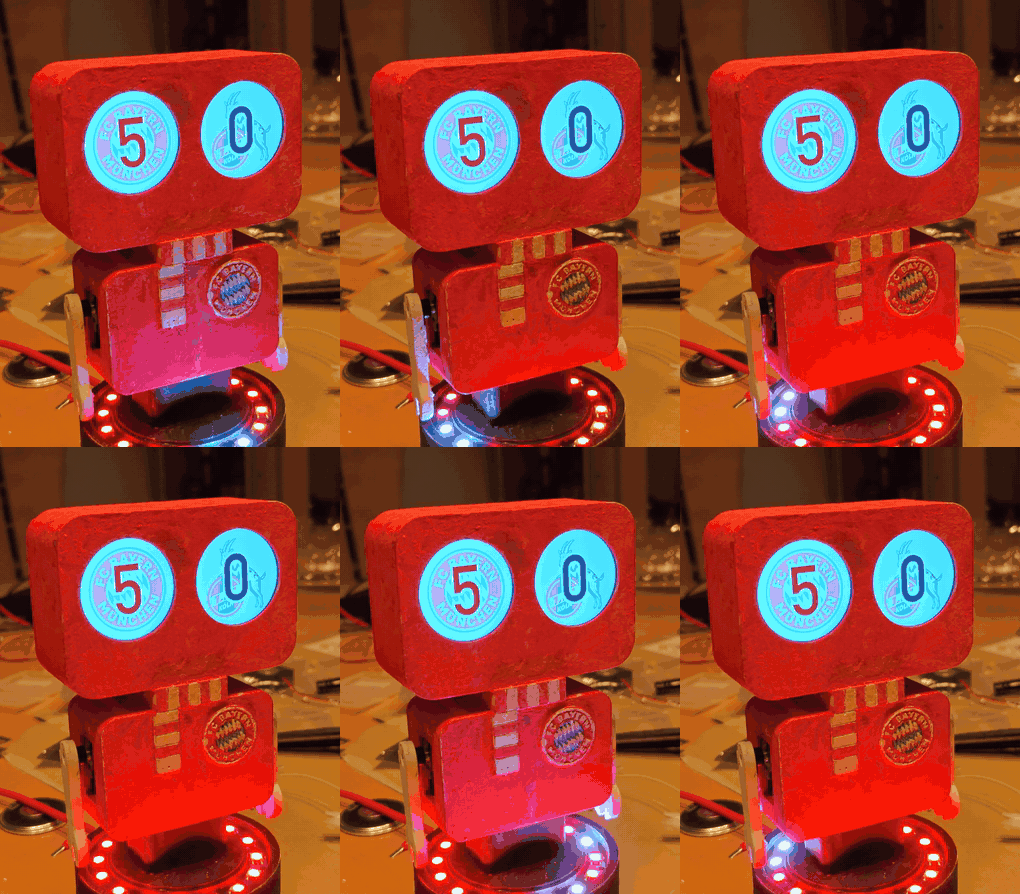
It hops on the home Wi-Fi and keeps one connection open to a small website. From there you can make it celebrate, choose what the eyes show (looking around, a scoreboard, the time, the weather) and pick a glow for the ring. The website also follows Bayern's matches and tells the robot when a goal goes in.
CAD Without a CAD Program
Honestly, I expected the 3D model to be where this whole thing fell apart. An LLM can't exactly drag a sketch around in Fusion.
Turns out it doesn't have to. It wrote the entire robot as a Python script: every wall, pocket and screw hole is a few lines of code, with the measurements as named constants at the top. Run the script and out come the printable files, plus a set of preview pictures from a little renderer it also wrote, so it could check its own homework.
And suddenly CAD was something I know how to do: arguing about a diff. "The servo doesn't fit." It printed two small test pieces with slightly different cutouts, I tried both, reported which one rattled less, and that number went into the script. "Make the badge on the chest the real logo."
It also ran the slicer from the command line and copied the print files onto the USB stick, numbered in the order I should print them. I carried the stick to the printer - Teamwork, i guess.
Rust on a Chip With No Operating System
The firmware is Rust with no OS underneath. It drives the two displays, the servos and the LED ring, talks to the MP3 module, and does a frankly surprising amount of networking:
- With no Wi-Fi set up, it opens its own hotspot and shows a QR code for it in one eye. Join, and a setup page asks for your home Wi-Fi.
- To pull that off it carries its own tiny DHCP and DNS servers and a small web server.
- Once it's on the home network, it opens a TLS connection to the website and keeps a WebSocket open.
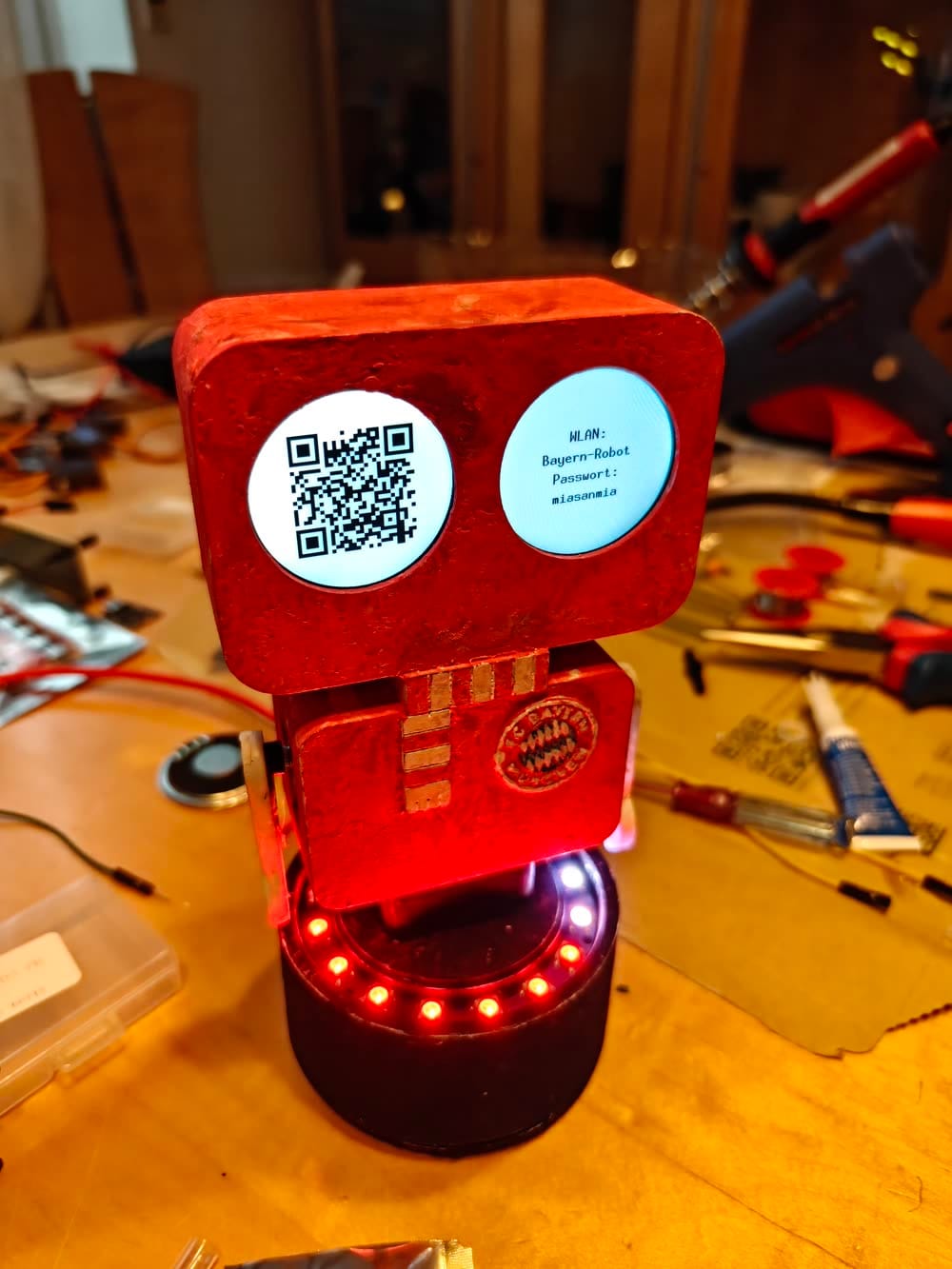
I didn't ask for most of that, at least not in those words. I said "it should be a hotspot when it can't find Wi-Fi" and "can it show the QR code in its eyes?". The DHCP server was not my idea.
Everything that doesn't touch hardware has tests that run on my laptop. The rest got tested the only way it could: flash it, read the log, ask the human what the robot is doing.
The Website
The backend is a Cloudflare Worker with one Durable Object that holds the robot's connection and its settings. Around match time, a timer checks a free results feed once a minute. The control page is plain HTML. Nothing fancy, and it doesn't need to be.
Where the Physical World Pushed Back
This is my favourite part, because here the tool is blind. It can't see the robot. All it has is a serial log and me.
So the loop became: it changes something, flashes the board and asks me what I see. I was basically a webcam with opinions.
- The arms moved the wrong way round. It wrote a little program that parks both servos at one end so I could mount the arms pointing down, then flipped the direction when I reported they were reversed.
- The arms punched the robot in its own face. One number.
- The arms were off the beat. It measured the tempo of the goal anthem straight from the MP3 file, found the spot where the bass kicks in, and lined the arm waves up with it.
- The robot sometimes refused to join my Wi-Fi. The log showed it picking the access point at the far end of the house. Now it picks the strongest one.
And it got things wrong, too. A wiring table said 3.3 V where we had already agreed on 5 V. I caught that one. And one idea of mine, putting the club logo into the iris of the eyes, was built in five minutes and removed five minutes later because it looked terrible. Cheap way to find out.
What I Actually Did
I decided what the thing should be. I measured parts with calipers. I printed, sanded, painted, soldered and glued. I took photos of failures. I said "no, the old one" a lot.
The hard part came at the very end. Cramming two displays, two servos, an LED ring, an MP3 player, a speaker and all their wires into that small shell, and soldering it all together, was properly fiddly. Getting everything in there and still working felt like an accomplishment.
So no, I don't feel like a spectator. But a project that would have eaten weeks took days, and those days went into the physical stuff. Everything virtual, the CAD, the embedded Rust, the slicer pipeline, the website, Claude just handled. My job was to say clearly what I wanted and report what was in front of me.
I think it helped that I understood what was going on on the software side, at least at a high level. Was that really necessary? Hard to say. It certainly feels a lot less scary that way.
The code, the wiring plan and the printable parts are on GitHub: FlorianWenzel/bayern-robot.